
23/02/2019
Recorded Temperature: 30 degrees
Location: Barefoot Beach Reserve, Fort Myers, FL.
Time of Departure to Location : 8:30 am

Bare B
Barefoot Beach Preserve is a 342 acre, untouched barrier island located in Florida. The purpose of the preserve is to protect the natural wildlife within itself such as the largest population of gopher tortoises (Gopherus polyphemus) located in the southwest of Florida, ensuring the protection of the environment itself, due to it being one of the last coastal strand and tropical hammocks on the Gulf Coast. Another purpose is to ensure the education with not only the local residents but also visitors. While lastly the final purpose behind Barefoot Beach Preserve is to foster research and education as it applies to the unique environment provided.
Barefoot Beach is made up of five different zones; Maritime Hammock, Estuary System, Coastal Strand, Foerdune and Upper Beach, this is in order of being closest to the shoreline.

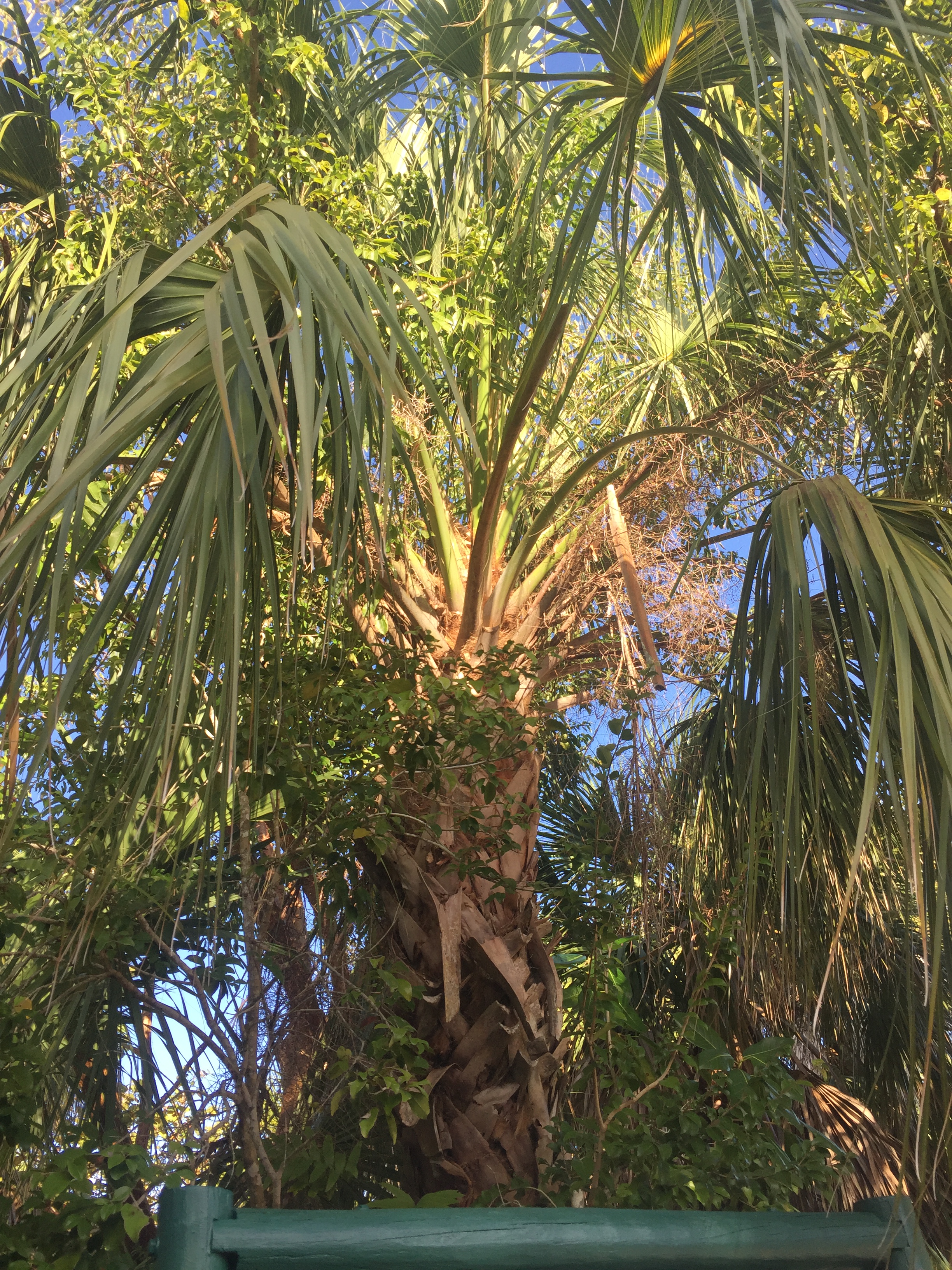
The walk around Barefoot Beach began with a talk from a volunteer called Jimmy Trulock, he spoke to us about the cabbage palm (Sabal palmetto) which is the states tree. The cabbage palm grows 20 metres high and has a fruit called a black drupe which contains a long single seed. Jimmy explained to us that the cabbage-like terminal bud has been eaten by the locals of Florida as the heart of the palm. He continued on telling us the purpose of the trunks where used for wharf piles, how they built their educational centre with this plants trunk and that bristles on the sheaths of younger leaves where made into scrubbing brushes.

Jimmy continued to lecture us about the the Gumbo-limbo tree (Bursera simaruba), this by the locals was named the tourist tree due to its dark red and peely bark, almost that of a sunburnt tourist. He emphasised that the plant itself had plenty of uses due to them being rapid growers and being adaptable to their environment. The plant produces an almost glue like substance which many years ago helped to catch birds.
The white stopper tree (Eugenia axillaris) is an evergreen shrub or simply known as a small tree found growing in the coastal hammocks. It blooms small white flowers all year round, but with a peak blooming time of spring and summer. Well known for its skunk like smelling bark and is a rare evergreen shrub due to competition from invasive species.
The next plant Jimmy showed us was the seven year apple (Casasia clusiifolia) this plant produces a fruit very much shaped like a lemon. The white flowers are fragrant and are sharply pointed. The plant has adapted to being salt and drought tolerant.
Walking around the corner we came across a prickly pear cactus (Opuntia) it has been given the name tuna or nopal plant. Jimmy explained that it was used to help lower cholesterol levels due to containing anti-inflammatory and anti-viral properties. It has hair-like prickles called glochids and they grow in flat and rounded platyclades.
Coastal ragweed (Ambrosia hispida) is an excellent sand stabiliser used on medicine and pharmacological research, in some places such as Belize it is turned into a soap to help aid reduction in itching skin, as well as for indigestion. Although typically it is turned into a strong tea.
Wild coffee (Psychotria nervosa) is a lesser known native species to Florida. It has glossy green leaves with grooves that are deep. The beans themselves don’t produce a caffeine but instead just produce a taste when roasted just like a coffee.

While looking at these plants we heard the screeching call of a male osprey, sat on a large post with the start of a nest, shortly after that the female mate returned with a large fish.
These posts where made during the 1950’s and ’60s due to the populations dropping dramatically due to the use of insecticide DDT, this contaminated the waterways and became present in the fish. Due to this, DDT was band in 1974. A major factor to why the posts where made also was that the ospreys nest in tall trees which are isolated, close to shallow water bodies.
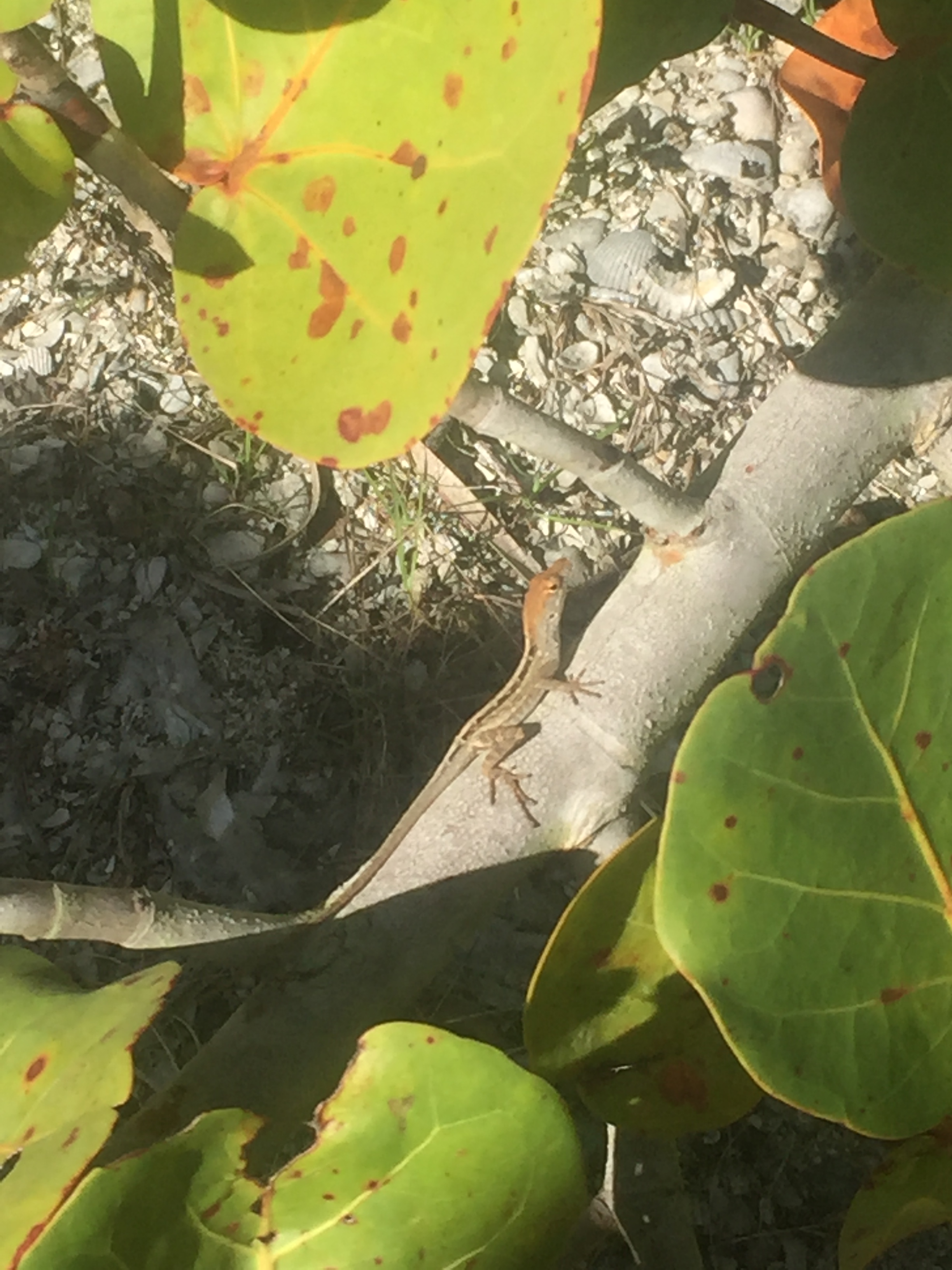
Brown anoles (Anolis sagrei) are originally native to Cuba and the Bahamas, but where introduced into Florida as a pet. This species is highly invasive and has reached exceptionally high population densities which we where able to observe while in Florida. The introduction of the brown anole into the United States of America had a massive impact on the native Carolina anole (Anolis carolinensis, commonly known as the green anole) which now is predominately found in the tops of trees.
Sea Grape (Coccoloba uvifera) is in the buckwheat family and is native to the coastal beaches. In late summer it has green fruit, similar to a grape vine, which gradually ripens into a deep purple colour. This plant provides a protective habitat for small animals and is a dune stabiliser. The fruit of the sea grape can be eaten raw or cooked into jellies and jams.
Poison ivy (Toxicodendron radicans) is a flowering plant which is well-known for its irritating, itching and sometimes painful rash when the majority of people touch it. This is caused from a clear liquid produced in the plants sap.
The Florida strangler fig (Ficus aurea), this plant produces a fig, and is a terrestrial epiphyte which latches onto a host, more often killing the host.
Understanding the differences between native, exotic and invasive species of plants:
- Native Plants: These naturally exist in the environment without the interaction and intervention of humans.
- Exotic Plants: Unlike the native plants the exotic plants exist in that environment due to the interaction and intervention of humans.
- Invasive Exotic Plants: Plants that have a dramatic affect on native species of plants, driving their populations down.
We finally concluded the day with a talk from a gentleman called Steven Torpy on soundscape ecology. He spoke about biophony and geophony, discussing how some sounds help improve memory and influence our fight or flight response. He spoke about how chatty Alligators (Alligator mississippiensis) are and how they use a higher frequency than expected to communicate together. He also spoke about how bats (Chiroptera) and bottle nose dolphins (Tursiops) use echolocation and are able to produce a frequency so high, humans are unable to hear it.

When we returned to the Vesta Field Station we headed out on the canoes, where we saw a variety of different animals. Ospreys where commonly seen gliding over the tops of the trees in their pairs. A small pod of common bottle nosed dolphins also played at the front of the canoe for several moments, breaching the water.
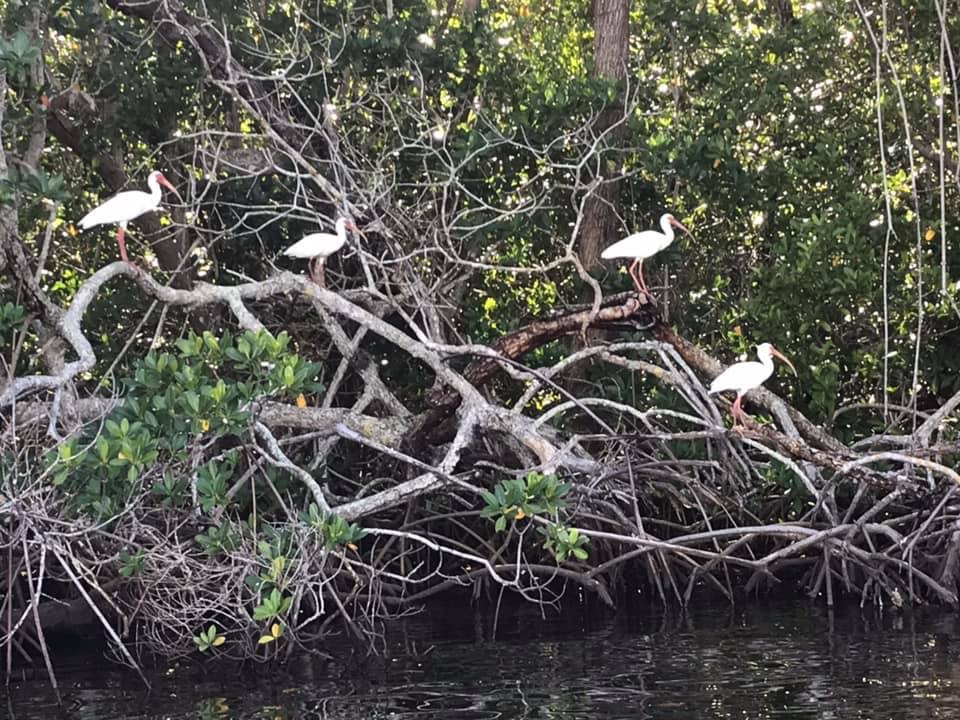
We also saw a group of white ibis (Eudocimus albus) perched on the mangroves, stood vocalising to themselves before Annabel and I proceeded to get too close and flew off.
Daily Species List and Acknowledged Behaviours –
- Gopher Tortoise basking in the sun
- Antlion in the ground
- Brown anoles displaying over territory and basking in sun
- Osprey carrying fish in locomotion (flight)
- Black racer in locomotion (moving)
- Brown pelicans diving into the ocean for food
For Further Information Visit: https://www.friendsofbarefootbeach.org/
 Florida Wetlands 2019